 English
 العربية
 简体中文
简体中文 Nederlands
 Français
 Deutsch
 Italiano
 Português
 Русский
 Español
Introduction to the Upper Mustang Kingdom
The Kingdom of Lo was established in the 14th century and ruled by a monarchy until Nepal became a republic in 2008. Due to its strategic position along the ancient salt trade route between Tibet and Nepal, Upper Mustang flourished culturally and economically. Even today, the region retains a distinct identity, preserved through restricted access and strong cultural traditions.
The Upper Mustang Trek is a unique journey into Nepal’s remote trans-Himalayan region, offering a deep exploration of Tibetan culture, ancient monasteries, dramatic desert landscapes, and the historic Kingdom of Lo. This restricted area trek takes you to Lo Manthang, one of the last preserved Himalayan kingdoms.
Upper Mustang Culture, Religion & Landscapes – The Last Forbidden Kingdom of Nepal
Upper Mustang, once known as the Kingdom of Lo, is a remote trans-Himalayan region in northern Nepal bordering Tibet. Isolated from the outside world until 1992, Upper Mustang has preserved a way of life that remains deeply rooted in Tibetan Buddhism, ancient trade traditions, and a stark high-altitude desert landscape. Trekking in Upper Mustang is not just a physical journey but a cultural immersion into one of the most well-preserved Himalayan societies.
Upper Mustang Trek Culture and Traditions
The culture of Upper Mustang is strongly influenced by Tibetan traditions, as the region lies north of the main Himalayan range. Local communities speak Loba (a Tibetan dialect) and follow centuries-old customs passed down through generations. Whitewashed houses, narrow alleys, prayer flags fluttering in the wind, and traditional mud-brick villages reflect a lifestyle shaped by isolation and resilience.
People of Upper Mustang practice seasonal farming, animal herding, and small-scale trade. Festivals such as Tiji Festival in Lo Manthang are major cultural highlights, featuring masked dances performed by monks to symbolize the victory of good over evil.
Upper Mustang Religion & Spiritual Heritage
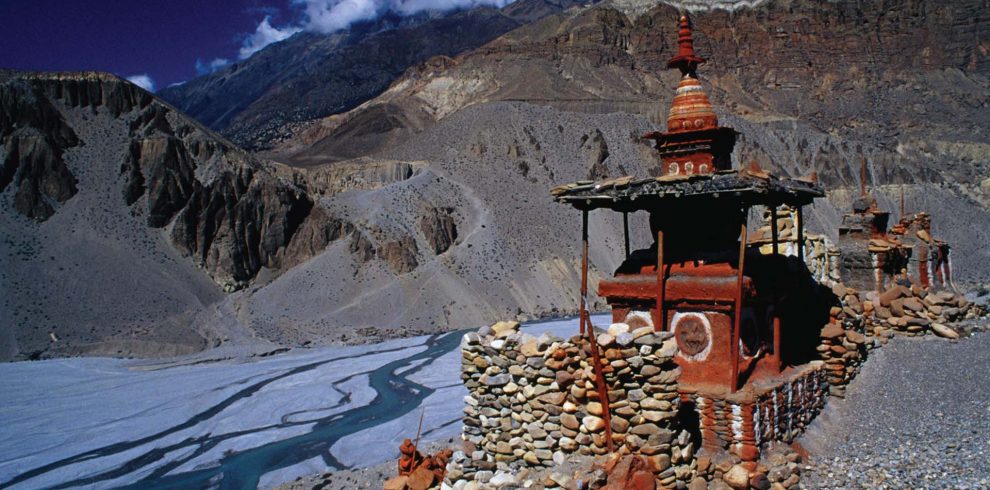
Upper Mustang is one of Nepal’s most important centers of Tibetan Buddhism, particularly the Sakya and Nyingma traditions. Throughout the trek, travelers encounter ancient monasteries, mani walls carved with Buddhist prayers, chortens, and caves used by monks for meditation.
Important religious sites include:
-
Lo Gekar Monastery – one of the oldest monasteries in Mustang, believed to predate Samye Monastery in Tibet
-
Thubchen and Jampa Monasteries in Lo Manthang
-
Chhoser Cave Monastery (sky cave)
Religion plays a central role in daily life, influencing rituals, architecture, and social structure.
Landscapes of Upper Mustang
The landscapes of Upper Mustang are dramatically different from other trekking regions in Nepal. Located in the rain-shadow of the Annapurna and Dhaulagiri ranges, the region features a high-altitude desert terrain with eroded cliffs, deep canyons, colorful rock formations, and vast open valleys.
The trek offers constant views of:
-
Nilgiri, Annapurna, and Dhaulagiri ranges
-
Wind-carved cliffs and red-orange canyon walls
-
Kali Gandaki River valley, one of the world’s deepest gorges
The barren beauty, combined with sudden green oases around villages, creates a unique and unforgettable trekking experience.
Major Places Highlighted During Upper Mustang Trek
Kagbeni
Kagbeni is the gateway to Upper Mustang and a culturally rich medieval village located at the confluence of the Kali Gandaki and Jhong rivers. Its narrow streets, monasteries, and traditional homes mark the transition into the restricted Upper Mustang region.
Chele & Syanbochen
These villages introduce trekkers to Mustang’s dry landscapes and traditional farming settlements, with striking cliff formations and chortens along the trail.
Ghami
Ghami is known for its long mani wall, one of the longest in Nepal, and its traditional mud-brick houses surrounded by barren hills.
Tsarang (Charang)
Tsarang is an important historical village featuring a large monastery and an ancient fortress (dzong). The village sits above a dramatic canyon and serves as a former administrative center of the Kingdom of Lo.
Lo Manthang
Lo Manthang is the walled capital of the former Upper Mustang Kingdom and the cultural heart of the region. Enclosed by ancient walls, the town houses royal palaces, historic monasteries, and vibrant local traditions. It remains the most significant cultural and spiritual destination of the Upper Mustang Trek.
Chhoser (Lo Manthang Side Trip)
Located north of Lo Manthang, Chhoser is famous for its ancient sky caves, some believed to be over 2,000 years old, offering insight into early human settlement in the region.
Itinerary
Duration: 5–7 hours
Your Upper Mustang Trek begins with a scenic drive from Kathmandu to Pokhara, passing rivers, terraced hills, and rural villages. Pokhara is the gateway to the Annapurna region and a major trekking hub in Nepal.
Overnight: Pokhara
Flight: 15 minutes
Trek: 3–4 hours
Enjoy a spectacular mountain flight to Jomsom, followed by your first day of trekking along the Kali Gandaki River to Kagbeni—the official entry point of the Upper Mustang Trek and restricted area.
Overnight: Kagbeni
Duration: 5–6 hours
Today marks the true beginning of the Upper Mustang Trek into the arid trans-Himalayan landscape. The trail passes through wind-eroded cliffs, traditional villages, and colorful chortens.
Overnight: Chele
Duration: 6–7 hours
Cross high passes with panoramic views of Nilgiri and Annapurna ranges. The Upper Mustang Trek reveals its dramatic desert scenery and strong Tibetan cultural influence.
Overnight: Syamboche
Duration: 5–6 hours
Descend into deep canyons before reaching Charang, an important cultural village of the Upper Mustang Trek, known for its monastery and ancient fortress (Dzong).
Overnight: Charang
Duration: 4–5 hours
Trek across wide valleys to reach Lo Manthang, the walled capital of the former Kingdom of Lo and the cultural heart of the Upper Mustang Trek.
Overnight: Lo Manthang
Duration: 4–5 hours
A rest and exploration day during the Upper Mustang Trek. Visit royal palaces, Thubchen and Jampa monasteries, and optional side trips to Chhoser cave monasteries.
Overnight: Lo Manthang
Duration: 4–5 hours
Retrace your route south through vast plateaus and dramatic landscapes. Ghami is famous for its long mani wall—one of the longest in Nepal.
Overnight: Ghami
Duration: 5–6 hours
Cross scenic passes and descend into colorful valleys. This section of the Upper Mustang Trek offers striking rock formations and peaceful villages.
Overnight: Samar
Duration: 6–7 hours
Descend toward the Kali Gandaki River with impressive canyon views and traditional Mustang settlements.
Overnight: Chhuksang
Duration: 6–7 hours
One of the most scenic days of the Upper Mustang Trek, crossing Gyu La Pass with breathtaking mountain views before reaching the sacred pilgrimage site of Muktinath.
Overnight: Muktinath
Duration: 6–10 hours
Conclude your Upper Mustang Trek with a drive back to Pokhara or onward to Kathmandu, marking the end of an unforgettable Himalayan journey.


